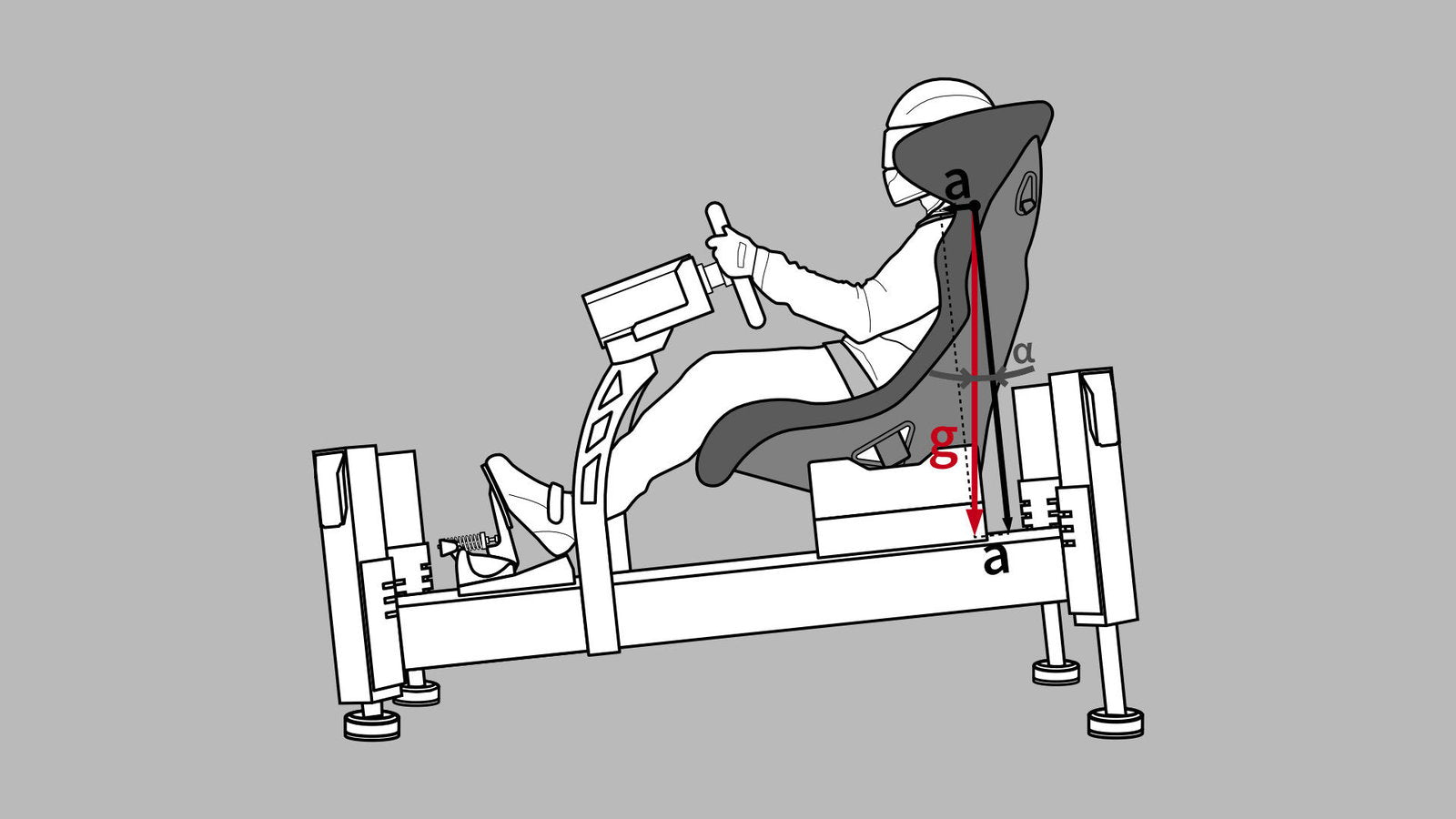
Motion platform vs QS-BT1 sustained force comparison - 400 N combined belt tension

Feel the G-forces your screen can't show

Classical motion platforms depend on Earth's gravity for prolonged accelerations - even a 20-degree pitch produces only about 165 N of perceptible sustained force on your chest. The QS-BT1 generates 200 N per channel, 400 N combined, and holds you in the braking zone for as long as the car decelerates.

Use it standalone, or pair it with a motion platform: the belts take over the sustained G-forces, and the platform spends its full range on everything else. Layered realism, each system doing what it does best.

Load video: Qubic System QS-BT1 braking simulation demo - harness loading under deceleration

Braking you can feel in your chest

Slam the brakes and the harness loads up instantly - the complex dynamics of deceleration pressed into your body, not just shown on screen. Wheel locks, slip and pre-impact protection each have their own distinct feel.

Racing effects include braking, lateral accelerations, centrifugal force in cornering, wheel slip and lock, traction loss and oversteer, gear changes, engine vibrations with rev limiter, vertical G-force and road harshness - depending on what the game's telemetry provides.

Two independent channels, every direction

Two independently controlled channels shape the force on each shoulder separately - the outside belt loads up through a corner, slack releases into oversteer, and every transition lands where your body expects it.

The drive is the same direct drive technology as the QS-220 and QS-DD-20: no gearbox, no backlash, motor torque directly proportional to the force on your shoulders. Fine details survive all the way to the belt.

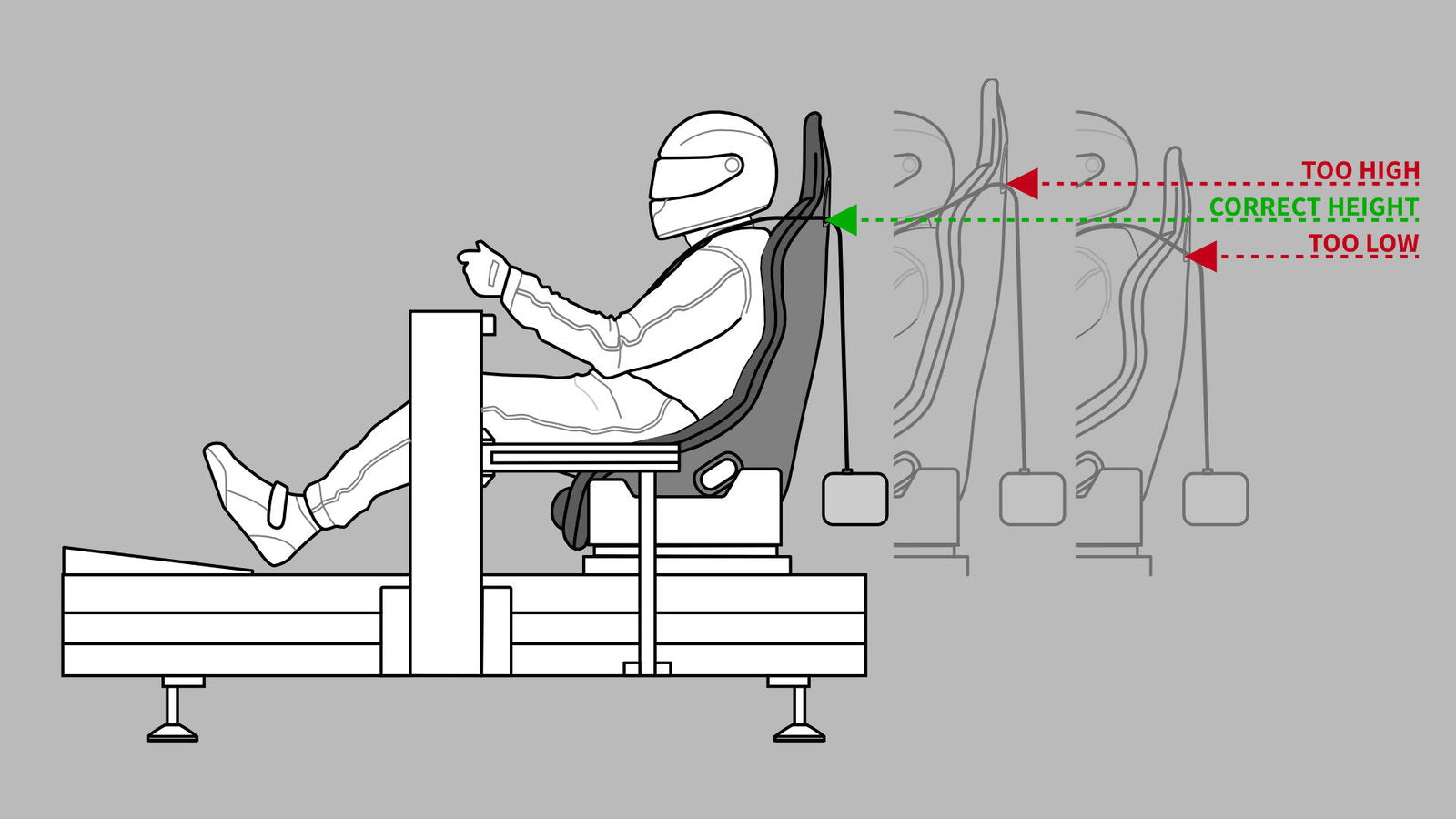
Correct seat belt slot height for QS-BT1 - slots level with the shoulders

Little details that matter

The seat decides half the experience: belt slots should sit level with your shoulders - too low pulls you down instead of back, too high softens the feedback. The slots must be wide enough for the belt to move freely; low-friction inserts are included to keep the fine details alive.

Use a proper racing harness - 4, 5 and 6-point all work, with a 3-inch 5-point being the most tested combination. An FIA-grade harness is recommended for its stiffness and a locking mechanism that holds under load - for example the Sparco Competition H-3.

Load video: Qubic System QS-BT1 engine vibration and road texture demo - belt pulse effects

Every bump, curb and pulse - through the belts

The belts don't just pull - they pulse. Curbs, road texture, engine vibrations and gear changes arrive as short, crisp impulses on your shoulders, layered on top of the sustained forces.

It's a feedback channel the rest of your rig can't reach: force feedback lives in your hands, pedals under your feet - the QS-BT1 puts the track on your upper body.

Manual, Downloads and Technical details

Manual
Qubic System QS-BT1 seat belt tensioner Manual download


Download
Qubic system QS-BT1 seat belt tensioner Software download


Technical details:

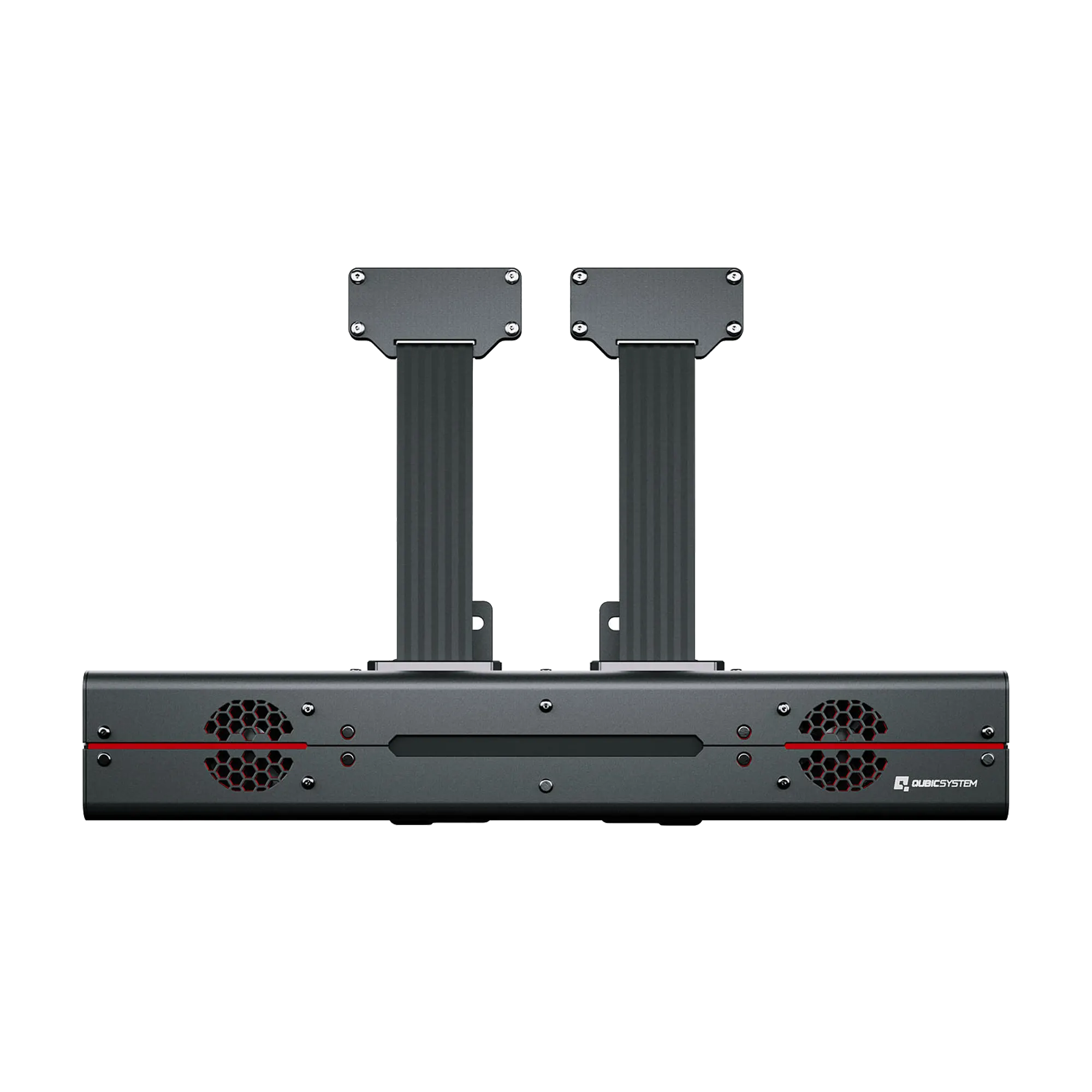
  • Dimensions: (L × W × H) 561 mm / 22.13 in x 99 mm / 3.90 in x 138 mm / 5.43 in
  • Weight: 12 kg / 26.46 lbs
  • Packing box dimensions: (L × W × H) 660 x 255 x 180 mm / 25.98 x 10.04 x 7.09 in
  • Packing box weight: 19 kg /42 lb
  • Power Supply Weight: 2.8 kg / 6.17 lbs
  • Power Source: 4A/115VAC, 2A/230VAC
  • Rated Power: 321 W
  • Inrush Current: 20A/115VAC, 40A/230VAC
  • Protection Class: 1
  • Interface: USB
  • Number of Independent Channels: 2
  • Pulling Force: 20.5 kg / 45 lbs / 200 N per channel
  • Storage Temperatures: +5 °C to +40 °C
  • Full Performance Temperatures: +5 °C to +35 °C
  • Supported Effects: Depends on Specific Game
  • Multifunctional RGB
  • Maximum Length of USB Cable: 3 m
  • Maximum Length of Motion-Lock Cable: 3 m
Compatibility

PC (Windows) only!
QS-BT1 runs exclusively with QubicManager/ForceSeatPM - it cannot be controlled from SimHub, SimTools or Sim Racing Studio. Consoles: Gran Turismo 7 on PS5 works via a Windows PC intercepting telemetry (supported as-is).


Motion platform compatibility

  • Works fully standalone - no motion platform required
  • Qubic System platforms: QS-H13, QS-210, QS-220, QS-CH2, QS-S25, QS-S35, QS-V20
  • PS motion platforms (custom mounting brackets required)
  • Next Level Racing Motion V3, Motion Plus, Traction Plus
  • 3rd party motion platforms - QubicManager runs in parallel with your platform software

Seat movers: QS-BT1 mounts to the top frame only, close to the pivot point, and reduces the allowed user weight.


Cockpit, seat and harness compatibility

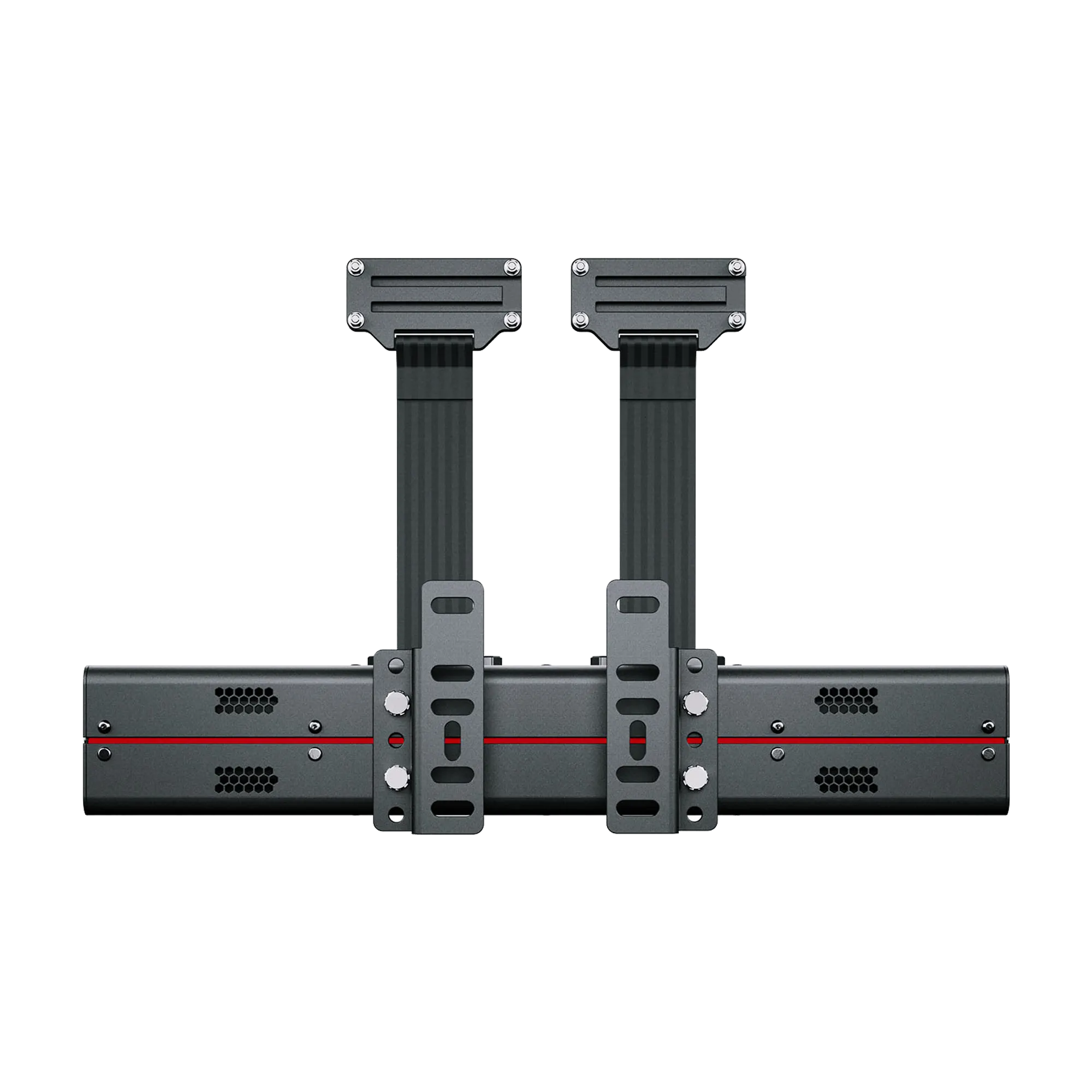
  • Aluminium profile cockpits: universal mounting adapters included
  • QS-CH1, QS-S25, QS-V20 and NLR Motion V3: dedicated installation kits sold separately
  • Bucket seat with belt slots at shoulder height, wide enough for free belt movement (not included)
  • Racing harness 4/5/6-point - 3-inch 5-point is the most tested, FIA-grade recommended (not included)


Note!
Standalone use requires the Motion-Lock remote switch (sold separately). Connected to an existing Motion-Lock circuit (QS-210, QS-220, QS-V20, QS-S25, QS-DD-20), no additional switch is needed.

What is in the package?

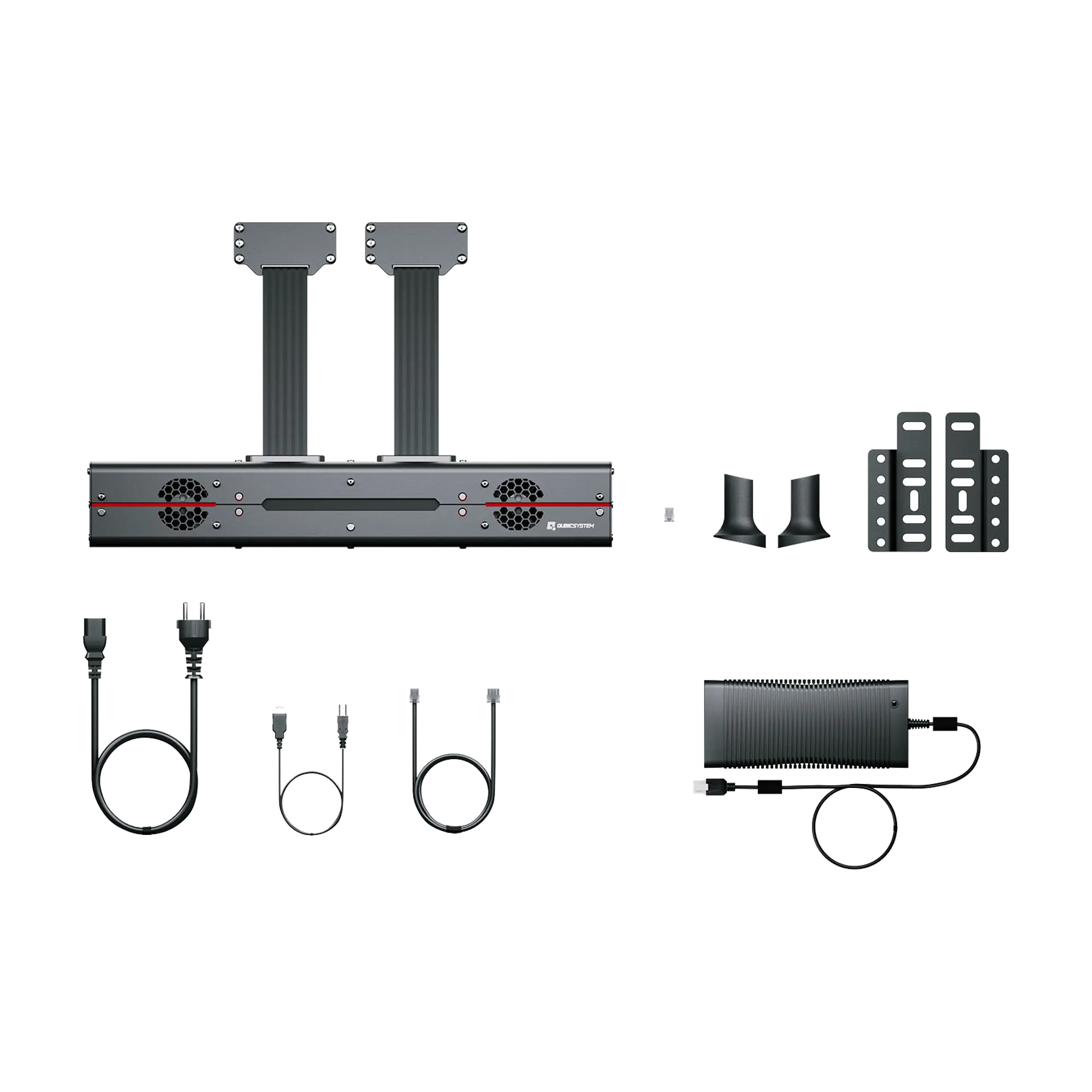
1× Main unit (QS-BT1)
1× USB cable
1× External power supply with power cord
2x Low friction inserts and velcro strips for seat belts slots
2× Universal mounting adapters for aluminium cockpits with necessary hardware
2× Belt buckles and fasteners
1× Motion-Lock jumper
1× Motion-Lock interlink cable

  • Not included:
    Seat belts
    Cockpit
    Bucket seat
    Motion-Lock remote switch (sold separately)
    Dedicated adapter for other cockpits (sold separately)

What our customers say about this product

What does the QS-BT1 actually do?

It tightens your harness in sync with telemetry: brake hard and the straps pull you into the seat exactly as deceleration G would in a real car. Two independent channels deliver up to 200 N (about 20.5 kg) of pulling force each - sustained G is the one sensation a static rig cannot fake, and belt tension is the most convincing illusion of it available.

Do I need a special harness and seat?

Yes - the tensioner works by pulling real harness straps, so you need a multi-point harness like the Sparco Competition H-3 routed through a seat with harness slots in the backrest. Racing shells from our seat collection are built for exactly this.

Does it work without a motion platform?

Absolutely - it connects over USB and runs standalone, and on a static rig it is often the biggest immersion jump per euro, because braking G is what your body misses most. With a motion platform it then completes the picture: motion handles rotation and texture, the belts handle sustained deceleration.

Which sims support the belt tensioner?

All major PC titles expose the telemetry the Qubic software reads - the specific effects available (braking, acceleration, impacts) depend on what each game publishes, which is why the spec honestly states supported effects are game-dependent. In the big racing sims, the core braking effect works exactly as intended.

Is the installation complicated?

Manageable in an afternoon: the unit (12 kg, 561 mm long) mounts behind the seat, the harness straps route through it, and the PC connection is a single USB cable (up to 3 m). Power is standard mains (115/230 V, 321 W rated). The linked manual covers the exact routing - and we gladly answer setup questions before or after purchase.